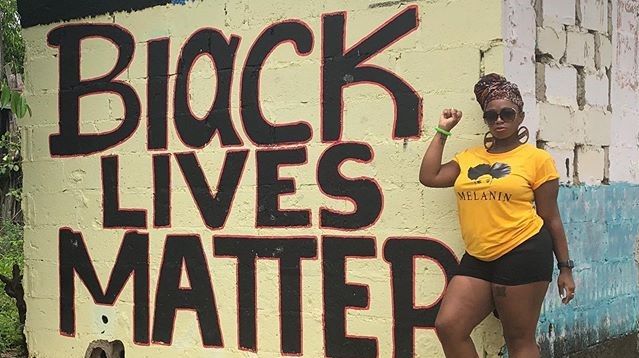
But, maybe you don't know that the city has a strong black influence on the culture
Maybe you know Cartagena for its beaches, for the beauty of its architecture, and even for the mythical literature of Gabriel Garcia Marquez.
and quite close by, a secular community resists, recognized by Unesco as the first autonomous black territory in the Americas.
San Basilio de Palenque is located about 50 km from Cartagena das Índias, in Colombia. There, medicine, language, school, traditional rituals, gastronomy... everything is impregnated with traces of African culture. For over 200 years, the territory located amidst the hills of the Colombian interior has been recognized as the first free black community free from any colonial rule - Colombia would only become completely independent from Spain about 20 years later.
Palenque, in Spanish, is equivalent to our quilombo - it refers to a territory where blacks and indigenous people sought refuge against colonial oppressions. The elders still preserve their own, original language - dissociated from all African languages and also from Spanish. This specificity was crucial for the community to be recognized as Intangible Heritage of Humanity by Unesco.
The community has since preserved its tradition fiercely. Around 600 families live in a village with unpaved streets, many trees, spacious brick houses, well-maintained schools, and community centers, and a lot of history.
In San Basílio, history is printed on the walls, in murals graffitied by local artists, in songs sung by rap and reggaeton groups recognized throughout the country.
One of the most emblematic local groups is called Kombileza-mi. The Sexteto Tabala group is an international reference in traditional Palenquera music, using drums. Even today, these drums are the rhythmic base of reggaeton and champeta - a genre of great success in the country and similar to funk.
History is also in the central square of the city, where a statue honors Benkos Biohó, the founder of the community in the 15th century. The elders say he was descended from a royal family from Guinea-Bissau, and he rebelled in different cities and farms that tried to enslave him. Finally, he founded the community and fought with weapons against colonial power - he was hanged after his hiding place was denounced.
The leader's trajectory is known to everyone in the city, passed down through the generations. Schools have autonomous content, focused on Afro-Colombian history. Language teaching is no longer mandatory, but weekly, the elders gather at the community center to tell stories to students of different ages enrolled in the local school who attend the session within the mandatory schedule.
With few income-generating options, tourism is one of the main ways the community sustains itself, organizing with guides, restaurants, as well as parties and cultural activities that enliven the village year-round and attract visitors from around the world. One of the attractions is the hair salons, with a variety of Afro hairstyles that exalt the beauty of the local black women and have become a national reference.
Funeral ceremonies are a highlight in the local tradition - the entire community is involved. The sung music is also considered a heritage - with a unique drum beat linked to African-derived religions and that were exported from San Basilio to different cities in Colombia!
The pride, joy, and dignity of the local population resist even under the most diverse pressures. The mystique of the place is unique and the visit is marked as a form of unexplainable ancestral connection, which only those who live the diaspora can feel.
#VivaDiaspora
05/16/2022